 31 Jul 2026
 9 mins read
In our hyper-connected, fast-paced modern world, time seems to slip through our fingers like fine sand. We wake up, rush through our morning routines, plunge into hours of work, scroll endlessly through social media feeds, and eventually collapse into bed, only to repeat the cycle the very next day. Amidst this relentless momentum, our personal milestones, fleeting thoughts, and subtle emotional shifts often go unnoticed. Have you ever looked back at a month and realized it passed by in a blur, leaving you with only a vague recollection of what you actually did or how you felt? This phenomenon is not just a personal failing; it is a symptom of modern digital burnout. We are so busy consuming the stories of others that we forget to document our own.
Psychologists and neuroscientists have long championed the profound benefits of journaling. The act of externalizing our thoughts onto a page—or a screen—has been proven to reduce the activity in the amygdala, the brain’s emotional center, thereby lowering stress and anxiety. Journaling helps us process complex emotions, recognize unhealthy behavioral patterns, and cultivate a deep sense of gratitude. However, despite knowing these benefits, a staggering number of people struggle to maintain a consistent journaling habit. Why is there such a massive disconnect between our desire to self-reflect and our ability to actually do it?
The answer lies in the friction of the process. Traditional journaling demands time, energy, and a specific environment. When you have had an exhausting day, staring at a blank page or an empty text box can feel incredibly intimidating. This is known as ‘blank page syndrome.’ You know you have things to say, but the effort required to articulate them beautifully feels overwhelming. You might start a diary with high hopes on January 1st, only to abandon it by January 15th. This cycle of starting and stopping can lead to feelings of guilt, further alienating us from the very practice meant to bring us peace.
But what if the friction could be removed entirely? What if capturing your life story didn’t require sitting down in a quiet room with a pen and paper, but could instead happen naturally, as a conversation? This brings us to a fascinating case study of an individual who managed to break the cycle of abandoned diaries and successfully documented a full year of their life, leading to profound personal growth.
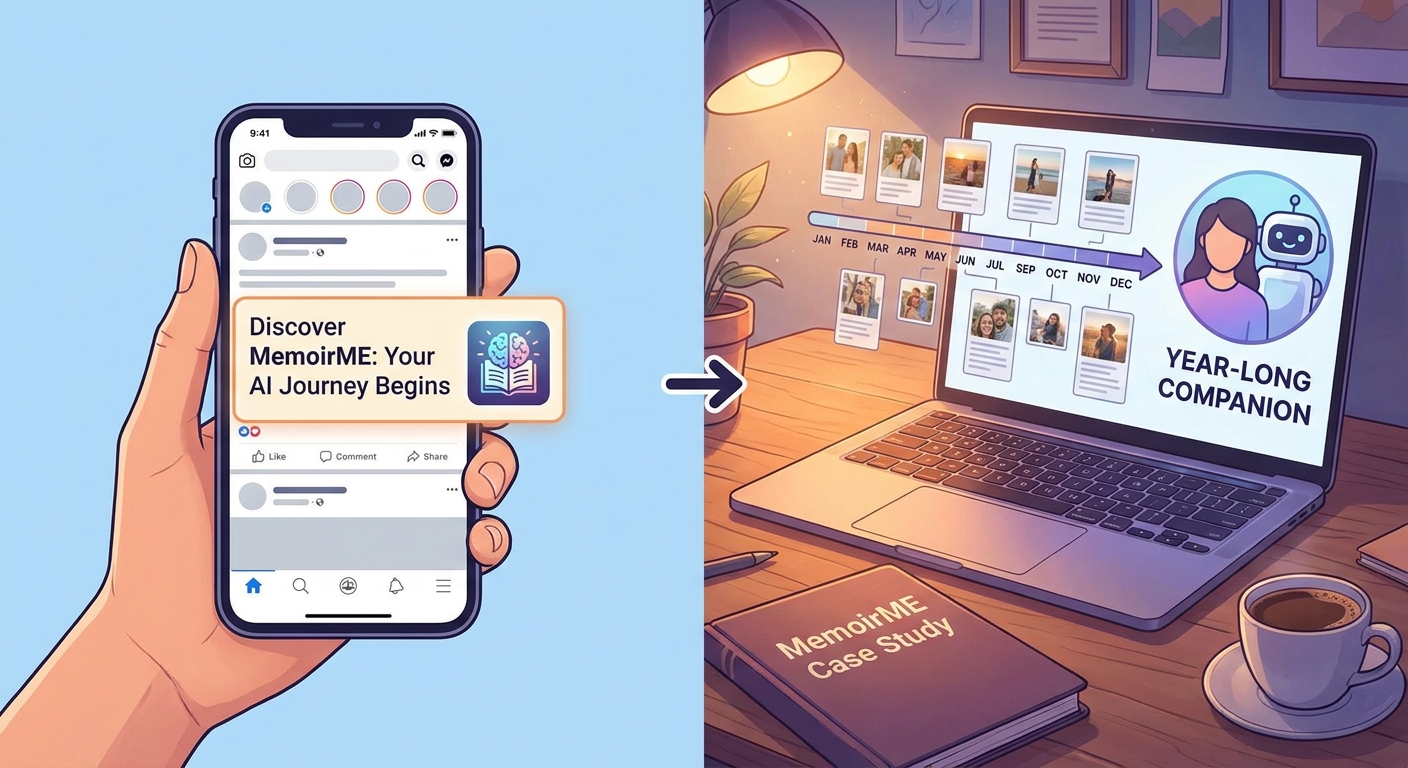
Meet Alex, a 32-year-old marketing manager. Like many of us, Alex’s life was a whirlwind of meetings, deadlines, and social obligations. By his early thirties, he realized that whole years were blending into one another. The details of his travels, the nuances of his relationships, and the evolution of his personal thoughts were fading into obscurity. Desperate to hold onto his memories, Alex tried physical notebooks, basic notes apps on his phone, and even specialized digital planners. None of them stuck. The physical notebooks were often left at home, and the basic notes apps lacked the structure and emotional depth he craved.
One rainy evening on his commute home, Alex stumbled upon an application called MemoirME. Developed by Nartus Pty Ltd, it promised to redefine how people capture and preserve their life stories. Intrigued by the concept but skeptical of his own commitment, Alex downloaded the app. He didn’t know it then, but this random discovery was about to transform his relationship with his own mind over the next 365 days.
The first major hurdle Alex faced was the classic blank page syndrome. On his third day of using the app, he felt too exhausted to type out his frustrations about a difficult work project. This is the exact moment where his previous journaling attempts would have failed. However, instead of forcing himself to type, he noticed the app’s AI Buddy feature. Rather than demanding a structured essay, the AI simply invited a conversation.
Alex decided to try it. He spoke into his phone, casually sharing his stress, his activities for the day, and his feelings of burnout, just as he would with a close friend over coffee. The AI responded empathetically, guiding the conversation and asking gentle, probing questions that helped him untangle his thoughts. What happened next felt like magic to him: the AI took the messy, unstructured conversation and helped write a beautifully coherent diary entry in Alex’s own voice. The friction of writing was completely eliminated. He didn’t have to worry about grammar, structure, or finding the perfect words. He just had to be honest. The psychological relief of being heard without judgment, combined with the tangible result of a perfectly captured memory, reinforced his desire to return the next day. This seamless integration of technology into the natural human need for storytelling is what makes tools like MemoirME so effective in building lasting habits.
As the weeks turned into months, Alex’s journaling evolved. Human memory is not a singular, linear text file in our brains; it is highly associative and multi-sensory. A specific smell can transport us back to our childhood; a photograph can instantly revive the emotions of a past vacation; a voice recording can bring back the exact tone and mood of a specific day.
Alex realized that merely typing out his day was limiting. He began to leverage the ability to seamlessly add photos, videos, and voice recordings directly into his text entries. During a weekend hiking trip in the mountains, his hands were too cold to type. Instead, he took a stunning photo of the misty landscape, recorded a 30-second voice note capturing the sounds of the wind and his breathless excitement, and attached them to his daily entry. He was no longer just writing a diary; he was creating a rich, multi-media memory capsule. Psychologically, this multi-sensory approach deepens our emotional connection to our past. When we review these entries later, the brain fires across multiple pathways, creating a much more vivid and visceral recall of the event. It turns a static memory into a living, breathing digital archive of one’s life.
Around the six-month mark, Alex noticed a shift in the content of his entries. Because the process had become so effortless, his reflections grew deeper and more vulnerable. He wasn’t just recording what he had for lunch or where he went; he was documenting his deepest fears, his relationship struggles, and his unfiltered opinions. But with this vulnerability came a sudden wave of anxiety. In an era where data breaches are front-page news and tech companies routinely harvest user data for targeted advertising, was it safe to pour his soul into a digital platform?
The hesitation to be completely honest in a digital diary is a valid and pervasive concern. If a journal is not private, it is inherently performative. You begin to subconsciously censor yourself, which defeats the entire purpose of therapeutic journaling. Fortunately, Alex discovered that his chosen platform applied End-to-End (AES) encryption. This meant that his diary entries, his photos, his voice notes, and his conversations with the AI Buddy were completely locked down. The encryption ensured that his data was protected even from the developers themselves. Knowing that he had a completely secure digital vault allowed Alex to shed his final layers of hesitation. Absolute privacy is not just a technical feature; it is a psychological necessity for genuine self-reflection. When we know we are truly unseen, we can finally be truly honest with ourselves.
Fast forward to exactly one year after that rainy commute. Alex sat down to review his year. He didn’t just have a few scattered entries; he had a comprehensive, beautifully documented timeline of his life. He could clearly see the trajectory of his personal growth. He noticed patterns in his stress levels and identified the triggers that caused his anxiety. He saw how a problem that seemed insurmountable in March had completely resolved itself by June. He listened to the voice note from the misty mountain hike and smiled at the photos of everyday mundane moments that had suddenly become precious.
This is the compound interest of self-reflection. Small, daily deposits of thoughts and memories build up into a massive reservoir of self-awareness and emotional intelligence. The future roadmap of platforms like MemoirME is evolving into exactly this: a meaningful space where users can safely reserve memories, milestones, and thoughts, and then retrieve them correctly in real-time whenever they need a reminder of who they are and how far they have come. For Alex, the AI was no longer just a feature; it had become a non-judgmental companion that held up a mirror to his life, helping him navigate the complexities of adulthood with greater clarity and purpose.
Our lives are not just a series of random events; they are intricate stories filled with joy, sorrow, triumph, and mundane beauty. The greatest tragedy of the human experience is how easily these stories are forgotten in the rush of everyday life. Whether you are dealing with the overwhelming pressure of a demanding career, navigating the beautiful chaos of raising a family, or simply trying to find your place in the world, your experiences matter. They are worth recording, worth reflecting upon, and worth preserving.
If you find yourself struggling to keep a traditional diary, it might be time to rethink your approach. Embrace the tools that remove the friction from the process. Allow yourself the luxury of a private, multi-sensory space to capture your life as it happens. If Alex’s journey resonates with you, and you want to experience the profound benefits of having a secure, intelligent, and highly personalized digital diary, consider exploring how an app like MemoirME can fit into your daily routine. You might just find that a random discovery today becomes the key to unlocking your own story for years to come.
Get weekly insights on digital privacy, exclusive tips, and early access to new MemoirME features.