 4 Aug 2026
 7 mins read
Have you ever paused in the middle of a mundane day, caught your own reflection in a store window or a mirror, and asked yourself a seemingly simple yet profoundly complex question: What actually makes me, me? It is a question that has haunted and inspired philosophers, poets, neuroscientists, and artists for thousands of years. When we strip away our names, our professions, our physical appearances, and the social roles we play in our daily lives, what is left? At the very core of our existence, the essence of our identity is intricately woven from the threads of our memories and the vast spectrum of our life experiences. We are, in a very literal sense, the living, breathing archives of our past.

To truly understand identity, it is helpful to look back at ancient philosophy. The Greek philosopher Plutarch popularized the thought experiment known as the Ship of Theseus. The paradox asks: If you have a wooden ship and, over the years, you replace every single wooden plank, mast, and sail as they decay, is it still the same ship once every original piece has been replaced? This paradox perfectly mirrors the human condition. On a biological level, our cells are constantly regenerating. The physical body you inhabit today is fundamentally different from the body you had a decade ago. Your beliefs, your habits, and your perspectives have also undergone massive transformations. So, if your body changes and your mind evolves, what remains constant? The philosopher John Locke proposed a groundbreaking theory in the 17th century: personal identity is founded on consciousness, specifically the continuity of memory. According to Locke, you are the same person you were ten years ago because you can remember being that person. Your memories serve as the invisible glue that holds the different versions of yourself together across the vast expanse of time.
Modern psychology has taken Locke’s theory even further. Psychologist Dan McAdams developed the concept of ‘Narrative Identity,’ which suggests that individuals form an identity by integrating their life experiences into an internalized, evolving story of the self. We do not just passively record events like a surveillance camera; we are active authors of our own autobiographies. We select specific memories, highlight certain triumphs, interpret our failures, and weave them into a cohesive narrative that gives our lives a sense of unity and purpose. This internalized story dictates how we view ourselves and how we interact with the world around us. For example, if you remember overcoming a significant hardship in your youth, you might frame your narrative identity around resilience and strength. If you cherish memories of exploring the woods as a child, your narrative might center around curiosity and a deep connection to nature. The stories we tell ourselves about our past dictate the trajectory of our future.
Memories are rarely just cold, hard facts. They are deeply emotional and profoundly sensory. Think about the phenomenon often referred to as a ‘Proustian moment,’ named after the French novelist Marcel Proust. In his famous work, the taste of a madeleine cake dipped in tea instantly transports the narrator back to his childhood, unleashing a flood of vivid, emotional memories. We all have our own versions of the madeleine. It could be the distinct smell of rain hitting the hot pavement, a specific song playing on the radio that teleports you back to a high school road trip, or the unique cadence of a loved one’s laugh. These sensory details are the architectural pillars of our identity. They remind us of where we have been, who we have loved, and the moments that shaped our hearts. Without these sensory anchors, our past would feel like a sterile textbook rather than a rich, lived experience.
However, as beautiful and foundational as our memories are, they are also incredibly fragile. The human brain is not a perfect hard drive. Over time, memories fade, details become blurred, and our minds can even subtly rewrite history based on our current emotional states. This cognitive impermanence is a natural part of human biology, but it poses a unique threat to our sense of identity. If we are our memories, what happens when we start to forget the small but meaningful details of our lives? What happens when the vibrant colors of our past begin to fade into a hazy grey? This is why the act of documenting our lives has been a fundamental human urge since the days of cave paintings. By externalizing our memories, we protect our identity from the erosive forces of time.
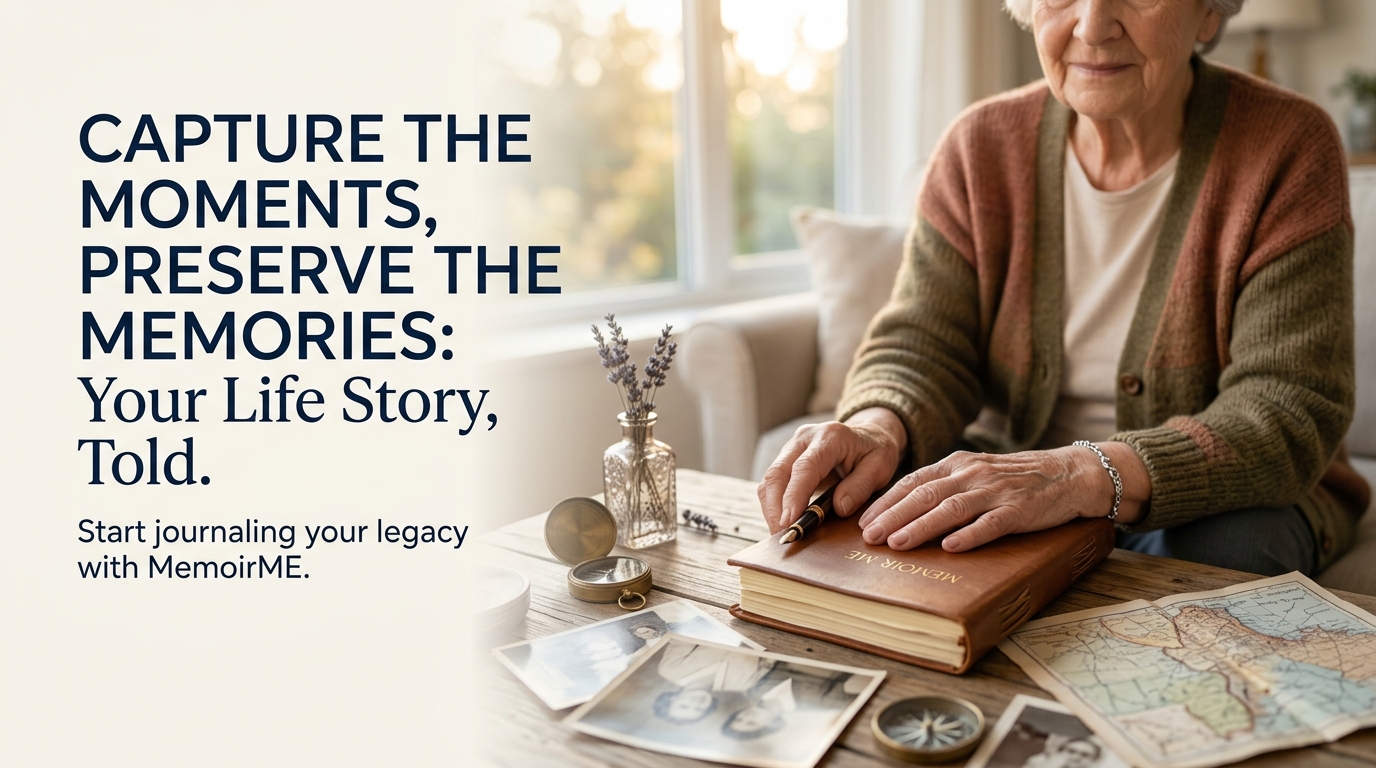
In our fast-paced modern world, relying solely on biological memory can leave our rich life tapestry frayed. We live in an era of information overload, where days can easily blur into weeks, and weeks into years. Capturing our experiences actively helps preserve the authenticity of our journey. This doesn’t just mean writing down a chronological list of events; it means capturing a multi-media memory capsule. Combining text, a photo of a specific environment, or a voice recording of a fleeting realization adds profound layers to our documentation. Platforms like MemoirME are seamlessly redefining how we capture and preserve these life stories. By allowing users to intuitively combine photos, videos, voice recordings, and text, the app acts as a secure vault for your narrative identity. Tools like this subtly weave into our daily routines, offering a safe space where we can reserve our important milestones and everyday thoughts, ensuring that our life stories remain brilliantly intact and accessible.
When we think about preserving our life story, we often default to the grand milestones: graduations, weddings, major travels, and career achievements. While these macro-milestones are undoubtedly crucial chapters in our autobiographies, they do not tell the whole story. In truth, our identity is largely forged in the quiet, seemingly unremarkable micro-moments of our daily lives. It is the morning cup of coffee you share in silence with your partner. It is the overwhelming sense of peace you feel during a solitary evening walk. It is the brief, profound conversation you had with a stranger on a train. These micro-moments are the mortar between the bricks of our major life events. They contain the raw, unfiltered essence of our character. Documenting these small moments—perhaps by snapping a quick daily photo or recording a brief voice note—creates a much more accurate and comprehensive portrait of who you truly are.
The ultimate purpose of understanding and preserving our identity through memory is not simply to dwell in the past, but to empower our future. When we face periods of uncertainty, stress, or profound change, we often feel unmoored, as if we are losing our sense of self. During these turbulent times, the ability to look back at who we were, what we have overcome, and what we have valued over the years provides immense comfort and clarity. Being able to retrieve these memories correctly in real-time exactly when you need them serves as a powerful compass. It reminds you of your inherent resilience, your capacity for joy, and the foundational values that have guided you through previous storms. By engaging with our past, we can make more intentional, authentic decisions about our future trajectory.
So, what makes you, YOU? You are a magnificent, ever-evolving mosaic of every joy you have felt, every tear you have shed, every mundane Tuesday you have lived through, and every grand adventure you have embarked upon. Your identity is not a static object to be found; it is an ongoing narrative that you are actively writing every single day. Honor that narrative. Pay attention to the sensory details of your life. Acknowledge your growth, cherish your micro-moments, and find ways to preserve your memories so they can continue to illuminate your path forward. If you are looking for a meaningful way to start building your own digital legacy and keep those precious life fragments safe, consider exploring MemoirME. Start capturing the sights, sounds, and stories of your life today, because your unique journey is a story worth preserving forever.
Get weekly insights on digital privacy, exclusive tips, and early access to new MemoirME features.