 11 Aug 2026
 9 mins read
In our hyper-connected, fast-paced modern world, the digital environments we inhabit daily have become just as influential on our mental well-being as our physical spaces. From the moment we wake up and reach for our smartphones, we are often bombarded by an overwhelming barrage of vibrant colors, notification badges, flashing pop-ups, and infinitely scrolling feeds. This constant digital noise sets a frantic, stressful tone for the day before we have even stepped out of bed. We have inadvertently transformed our most personal devices into relentless attention-harvesting machines, and the psychological toll is becoming increasingly apparent. The modern internet often feels like a crowded, noisy marketplace where every application is shouting for a fraction of your time. Consequently, the concept of a ‘digital sanctuary’—a quiet, intentional space on our devices—has never been more crucial. This is where the profound power of a minimalist user interface comes into play. Minimalism in digital design is not merely an aesthetic trend; it is a fundamental psychological tool for reducing stress, reclaiming our focus, and fostering a sense of inner calm.
To understand why minimalism is so effective at reducing anxiety, we must first examine the negative impacts of digital clutter. Psychologists and neuroscientists have long studied a phenomenon known as ‘cognitive load,’ which refers to the total amount of mental effort being used in the working memory. Human working memory has a limited capacity. When an app interface is cluttered with dozens of buttons, menus, advertisements, and competing colors, it forces the brain to process an immense amount of visual information simultaneously. This is visually exhausting. Furthermore, Hick’s Law, a well-known principle in psychology and user experience design, states that the time and effort it takes to make a decision increases with the number and complexity of choices. When faced with a complex interface, users experience decision fatigue. This micro-stress, multiplied by dozens of apps and hundreds of interactions a day, leads to a chronic state of low-level anxiety. It is akin to trying to read a deeply philosophical book in the middle of a chaotic, loud, and messy room. The environment actively works against your ability to concentrate and reflect. Our brains interpret this visual noise as a lack of control, which can trigger the release of cortisol, the body’s primary stress hormone.
When people hear the word ‘minimalism,’ they often picture stark white screens, tiny fonts, and an absence of personality. However, true functional minimalism in user interface design is far more nuanced and profound. Inspired by historical movements like Bauhaus and traditional Japanese Zen philosophy, digital minimalism is about intentionality. It is the practice of stripping away the non-essential so that the essential may speak. The legendary industrial designer Dieter Rams famously coined the phrase ‘Less, but better.’ In the context of a digital application, this means every single pixel, button, and line of text must serve a clear, justifiable purpose. It involves the masterful use of typography to create a clear hierarchy of information, the application of purposeful and muted color palettes that guide the eye without overwhelming it, and, most importantly, the generous use of negative space (often called white space). Negative space is not empty space; it is the breathing room that allows the user’s mind to rest and focus on the core content. True minimalism does not remove features for the sake of looking clean; rather, it organizes and presents those features in a way that feels natural, intuitive, and completely frictionless.
The transition from a cluttered app to a minimalist one can evoke a literal sigh of relief. But how exactly does this visual simplicity translate to psychological tranquility? There are four primary mechanisms at play. First, there is a drastic reduction of cognitive load. By removing superfluous elements, the user’s brain no longer has to subconsciously filter out useless information. The mental energy saved can then be redirected toward the actual task at hand—whether that is writing, reflecting, or simply organizing thoughts. Second, minimalist interfaces cultivate deep focus and flow states. A distraction-free environment acts as a protective bubble around your attention. Without pop-ups or complex sidebars vying for your gaze, you can achieve a deeper level of immersion in your digital activities. Third, minimalist design provides emotional grounding through negative space. In the physical world, wide-open spaces like an empty beach or a quiet field induce feelings of peace. Digital negative space mimics this physical openness, triggering a similar relaxation response in the brain. Finally, a clean interface restores a profound sense of control. Stress often stems from feeling overwhelmed and at the mercy of our surroundings. A simple, predictable, and easy-to-navigate interface empowers the user, making them feel like the master of their tools rather than a victim of digital chaos.
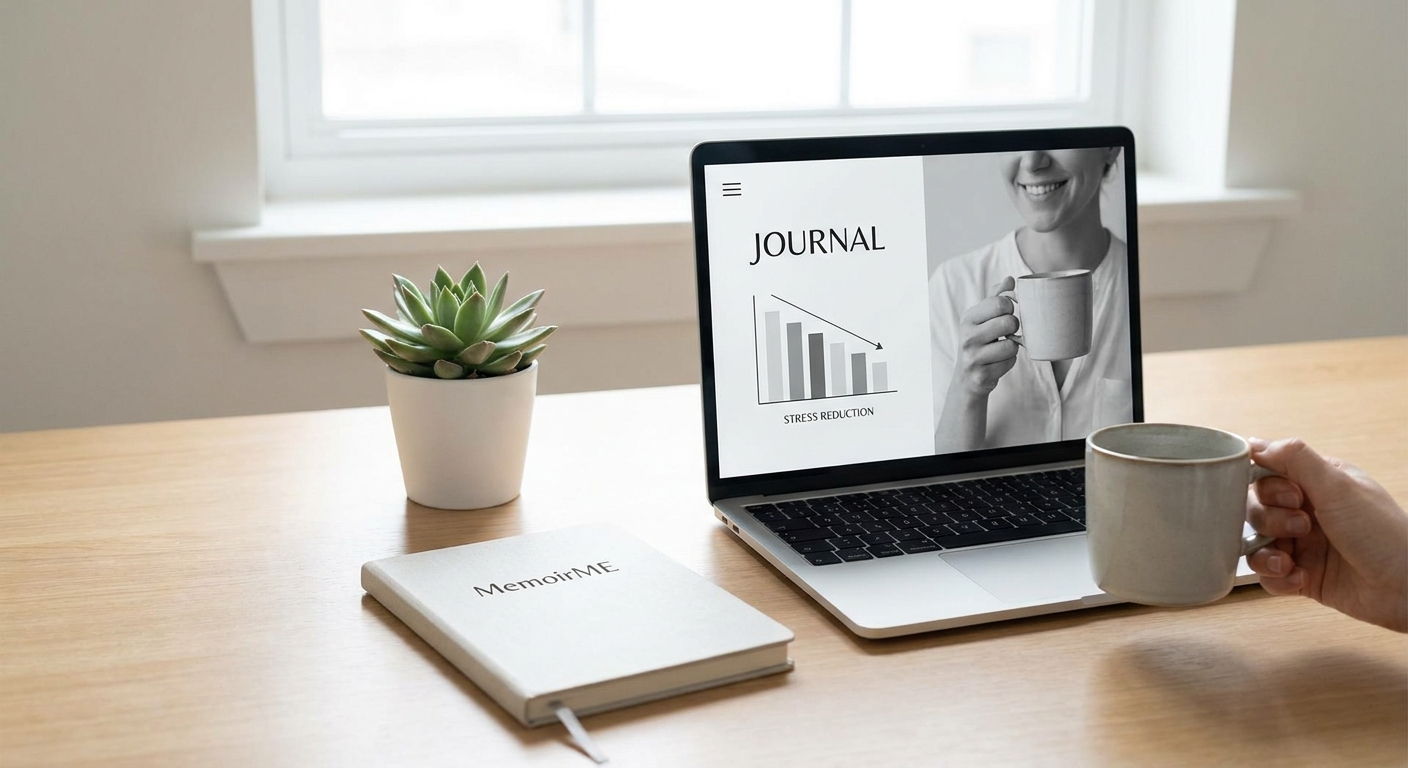
Understanding the deep psychological need for digital sanctuaries was the foundational spark for Nartus Pty Ltd when conceptualizing and developing MemoirME. We observed that traditional journaling and memory-keeping applications fell into two frustrating extremes. On one hand, some apps were far too basic, acting merely as simple text editors that failed to capture the rich, multi-sensory nature of human memories. On the other hand, apps that did allow for rich media were often bloated, overly complex, and heavily gamified with social sharing features, tags, stickers, and overwhelming menus. We asked ourselves a critical question: How can we build a platform that allows users to create a rich, multi-media memory capsule without compromising the serene, stress-free environment required for self-reflection? The answer lay in the rigorous application of minimalist design principles. The design journey of MemoirME was an exercise in restraint and empathy. Our core philosophy was that the interface should act as an invisible frame around the masterpiece of the user’s life story. When you are pouring your heart out into a diary entry, looking at a cherished photograph, or listening to a voice recording of a loved one, the app itself should quietly step out of the way.
Achieving this balance required meticulous engineering and design work. We wanted users to be able to seamlessly add text entries, photos, videos, and voice recordings without feeling like they were operating a complex piece of software. In MemoirME, adding a voice note or attaching a video is a fluid, intuitive action that happens right within the calming flow of the journal entry. There are no deeply nested menus or aggressive color schemes competing for attention. By embracing negative space, using a soft, neutral color palette, and prioritizing crisp, legible typography, we ensured that the user’s memories remain the absolute focal point. The app is intentionally designed to be a quiet place—a secure vault where you can unload the day’s stress rather than accumulate more of it. It is a space that respects your time, your privacy, and your mental energy.
The commitment to minimalism and user-centric design at Nartus Pty Ltd does not stop at the current version of MemoirME. As we look toward our future roadmap, our vision is evolving into something even more profoundly meaningful. We are building a platform that not only captures memories but allows users to safely reserve milestones, thoughts, and legacies, with the ability to retrieve them correctly in real-time exactly when they are needed. Imagine being able to effortlessly pull up a specific voice recording from a pivotal moment in your life years later, all within an interface that remains as clean, fast, and unburdened as the day you first opened it. Adding advanced retrieval and safe reservation features typically adds layers of UI complexity, but our ongoing design journey is strictly guided by our minimalist ethos. We are continually innovating to ensure that as MemoirME grows in capability, it remains a steadfast digital sanctuary, shielding users from the anxiety of digital clutter while preserving their most precious life stories with dignity and clarity.
While utilizing thoughtfully designed applications is a significant step, embracing digital minimalism is a holistic practice that extends beyond any single tool. To cultivate a more peaceful digital life and reduce daily stress, consider taking a few actionable steps today. Begin by conducting a rigorous audit of the applications on your smartphone; delete anything you have not used in the past month. Next, ruthlessly disable non-essential push notifications—allow only messages from real people and critical calendar alerts to interrupt your day. Organize your home screen to feature only tools that bring value or promote intentional habits. Finally, establish ‘tech-free’ zones or times in your daily routine, such as the first hour after waking up or the hour before going to sleep. By deliberately curating your digital environment, you transform your devices from sources of chronic stress into tools that genuinely serve your well-being.
The spaces we inhabit shape how we feel, and in the modern era, our digital spaces are just as vital as our physical ones. A minimalist interface is much more than a sleek design choice; it is a compassionate approach to human psychology, offering a refuge from the exhausting noise of the internet by reducing cognitive load and restoring mental clarity. The careful, empathetic design journey behind tools like MemoirME demonstrates that we do not have to sacrifice rich functionality to achieve simplicity. By choosing digital environments that prioritize our mental well-being and by adopting intentional habits, we can reclaim our focus, reduce our daily stress, and create a quiet, beautiful space to reflect on the stories that truly matter. If you are seeking a peaceful, private sanctuary to capture your life’s moments without the noise, it might be time to experience the calming simplicity of a thoughtfully designed memory capsule.
Get weekly insights on digital privacy, exclusive tips, and early access to new MemoirME features.